March 9, 2026
Florida DEP Dock Permit Rules and Requirements Explained
By Ileen Gonzalez
Building a dock in Florida involves more than design and construction. Before any structure extends into the water, property owners must comply with environmental regulations administered by the Florida Department of Environmental Protection. These rules exist to protect marine ecosystems, maintain water quality, and ensure safe navigation throughout the state’s waterways.
For homeowners and developers planning waterfront improvements, understanding how waterfront permits work can prevent expensive redesigns, project delays, and enforcement actions. This guide explains how Florida dock permits work, the regulatory pathways available, and the most important compliance requirements property owners should understand before starting construction.
How Florida Regulates Dock Construction
Florida’s shoreline environments contain sensitive ecosystems such as seagrass beds, wetlands, mangrove habitats, and fish breeding grounds. Because Florida dock building docks are over or within these environments, construction must be reviewed under environmental protection laws.
The Florida Department of Environmental Protection oversees the Environmental Resource Permit program, which evaluates whether waterfront construction may affect wetlands, submerged vegetation, shoreline stability, or water circulation. In many cases, a dock project also involves state-owned submerged lands that are held in public trust, meaning authorization is required before occupying or building over them.
Although the state provides the main regulatory framework, dock permitting may also involve federal and local authorities depending on project location and design. If you are planning a waterfront structure, working with professionals who specialize in dock construction permitting support or who knows dock regulations in Florida can simplify the approval process.
Agencies That May Review Dock Permit Applications
The permitting process often involves coordination between multiple agencies. The primary review authority is the Florida Department of Environmental Protection, which evaluates environmental impacts and permit eligibility under state regulations.
Projects located in navigable waters may also require approval from the U.S. Army Corps of Engineers. Federal review focuses on maintaining safe navigation and preventing damage to aquatic ecosystems protected under federal law.
Wildlife protection considerations can also involve consultation with the Florida Fish and Wildlife Conservation Commission and the National Oceanic and Atmospheric Administration when projects may affect protected species or marine habitats.
Local governments often add another layer of review. Counties and municipalities may enforce shoreline zoning, construction setbacks, and structural safety codes that must be satisfied before building permits are issued.
The Three Permit Pathways for Florida Docks
Dock construction projects generally fall into three regulatory categories depending on size and environmental impact.
Permit Exemptions
Small residential docks sometimes qualify for exemptions under Florida Statute 403.813. These exemptions apply to structures that meet strict criteria designed to minimize environmental impact.
Typically, exempt docks must remain within defined size limits, avoid dredging or filling activities, and serve only private residential use. Even when a project qualifies for exemption, documentation confirming eligibility is often recommended to avoid issues during property transactions or inspections.
General Environmental Resource Permits
If a dock does not qualify for a full exemption but still presents minimal environmental risk, it may be approved under a general permit defined in Florida Administrative Code Rule 62-330.427.
General permits cover many residential dock projects and include standardized conditions that limit environmental impact. These rules commonly restrict dock width, total overwater square footage, and the number of vessels that may be moored at a private dock.
Because these permits follow established design standards, they are typically processed faster than individual permit applications.
Individual Environmental Resource Permits
Large or complex waterfront structures require a full individual permit review. This applies to projects such as large private docks, multi-slip facilities, or commercial marina developments. In coastal areas such as the Florida Keys, dock projects often involve additional environmental reviews and federal approvals. Our guide explaining Florida Keys dock permit requirements outlines how these layered approvals typically work.
Individual permits require detailed engineering plans and environmental evaluation. Regulatory agencies assess potential impacts to wetlands, marine habitats, water circulation patterns, and navigation safety before issuing approval.
Dock Design Standards That Affect Permit Approval
Many residential dock permits depend on design choices that reduce environmental impact. The Florida Department of Environmental Protection often requires docks to follow design practices that protect underwater vegetation and natural water movement.
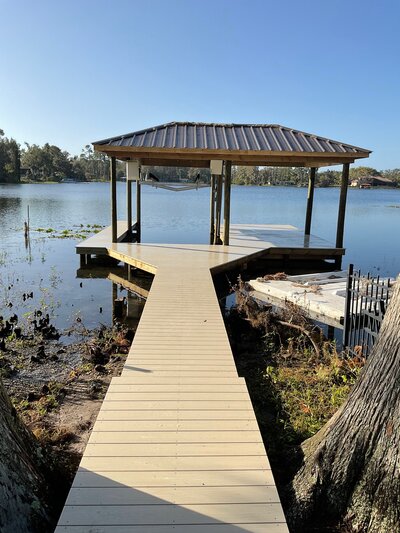
Walkways connecting the shoreline to the dock are usually designed with narrow widths to reduce shading over submerged vegetation. Deck boards commonly require spacing between planks so sunlight can reach underwater plants such as seagrasses. In areas where aquatic vegetation is present, elevated dock structures may also be required to maintain natural light penetration and water flow.
Boat mooring areas may also be subject to water depth requirements. These standards help prevent propeller damage to seagrass beds and reduce sediment disturbance in shallow waters.
Property Rights and Dock Placement
Waterfront property owners in Florida hold certain shoreline access rights associated with their land. These rights allow access to adjacent water bodies, but they must be exercised without interfering with neighboring properties or public navigation routes.
Dock placement, therefore, must consider property boundaries extending into the water as well as navigation corridors. Structures that extend too far into narrow waterways or encroach on adjacent access corridors may not receive permit approval.
Because these placement rules vary with waterway size and shoreline conditions, accurate site surveys are often required before finalizing dock designs.
Sensitive Water Areas With Additional Regulations
Some water bodies receive enhanced environmental protection due to ecological significance. In these locations, dock permits may be subject to stricter design requirements or additional review procedures.
Aquatic preserves protect ecosystems that support seagrasses, mangroves, and marine wildlife. Construction in these areas must minimize environmental disturbance and often requires carefully designed elevated structures.
Outstanding Florida Waters receive additional protection to maintain existing water quality conditions. Dock size limits and environmental review standards may be stricter in these locations compared to standard waterways.
Wildlife protection areas may also impose design limitations intended to protect marine species such as manatees or important fish habitats.
Dock Repairs and Storm Damage Replacement
Florida regulations recognize that waterfront structures occasionally require repair due to weather events or long-lasting use. Under certain conditions allowed by Florida Statute 403.813, docks may be repaired or replaced without obtaining a completely new permit.
This typically applies when the replacement structure remains nearly identical in size and location to the original permitted dock. Repairs that expand the structure or modify the design may require additional permitting review.
Following major storms, the Florida Department of Environmental Protection may issue temporary emergency orders that simplify repair approvals for storm-damaged docks.
Common Issues That Delay Dock Permits
Many dock permit applications face delays because of avoidable planning mistakes. Inaccurate site measurements, missing environmental surveys, or dock designs that extend over seagrass beds can trigger additional review from regulatory agencies.
Projects may also be delayed when applicants overlook local zoning requirements or attempt to construct docks larger than the permit category allows. Addressing these issues during the planning stage significantly improves the chances of faster approval.
For this reason, many waterfront contractors and property owners rely on professional marine construction permit processing to manage surveys, documentation, and coordination with regulatory agencies.
Conclusion
Dock permitting in Florida can involve environmental reviews, regulatory coordination, and detailed documentation requirements. Many property owners choose to work with permit specialists to manage this process efficiently.
Professional permit support helps ensure that project plans align with environmental regulations before submission. Experienced permitting teams also coordinate with agencies and help resolve design issues that might otherwise delay approval.
For complex waterfront construction projects, early permit planning can often determine whether a project proceeds smoothly or becomes delayed by regulatory complications.

Ready to Make Permitting a Breeze?
Let’s Take the Stress Out of Your Next Marine Construction Project
From simplifying the permitting process to managing every detail, Breezy Permits is here to save you time, reduce frustration, and get your project moving. Whether you’re tackling a dock installation, seawall repair, or any other waterfront project, we’re ready to help.
OR