WELCOME TO THE BLOG
Marine construction projects in Florida often require several detailed surveys to meet environmental and regulatory standards. Because the state closely protects its waterways, it’s common for at least one survey to be needed before project approval. The most frequently requested surveys for marine construction projects include Boundary Surveys, Seagrass Surveys, and XY Surveys. These are the three we’ll focus on in this post.
However, depending on your project, your engineer, environmental reviewer, or local building department might request additional surveys. Some of these may include Topographic Surveys, Hydrographic Surveys, or As-Built Surveys, among others. Each of these surveys plays a key role in ensuring your marine construction project in Florida meets all permitting requirements while protecting the surrounding environment.
A Boundary Survey is almost always required for marine construction projects in Florida. It defines the exact property lines of a specific area, showing what portion of land is owned by an individual or entity. The information gathered from a boundary survey helps reviewers understand the existing site conditions, which is essential for engineers to create accurate plans and establish control points for the project.
In marine construction, these surveys also include riparian right lines, which indicate where the property ends as it meets the waterway. In Florida, riparian rights refer to the rights held by property owners whose land extends to the normal high-water line along navigable waters. This means that if a property directly borders a body of water, the owner has certain protected riparian rights associated with that waterfront access.
As we’ve mentioned in a previous article Seagrass Surveys in South Florida, that seagrasses play a vital role in Florida’s environment and economy. Because of their importance, these habitats are highly protected by agencies such as the Florida Department of Environmental Protection (FDEP) and the U.S. Army Corps of Engineers (USACE). Each agency has its own set of regulations designed to ensure these underwater ecosystems remain healthy and undisturbed.
When a proposed project site includes areas with seagrass, a Seagrass Surveying is usually required. This survey helps document the current coverage and condition of seagrasses within the project area. Both the FDEP and USACE typically request these surveys for projects located in or near known seagrass habitats.
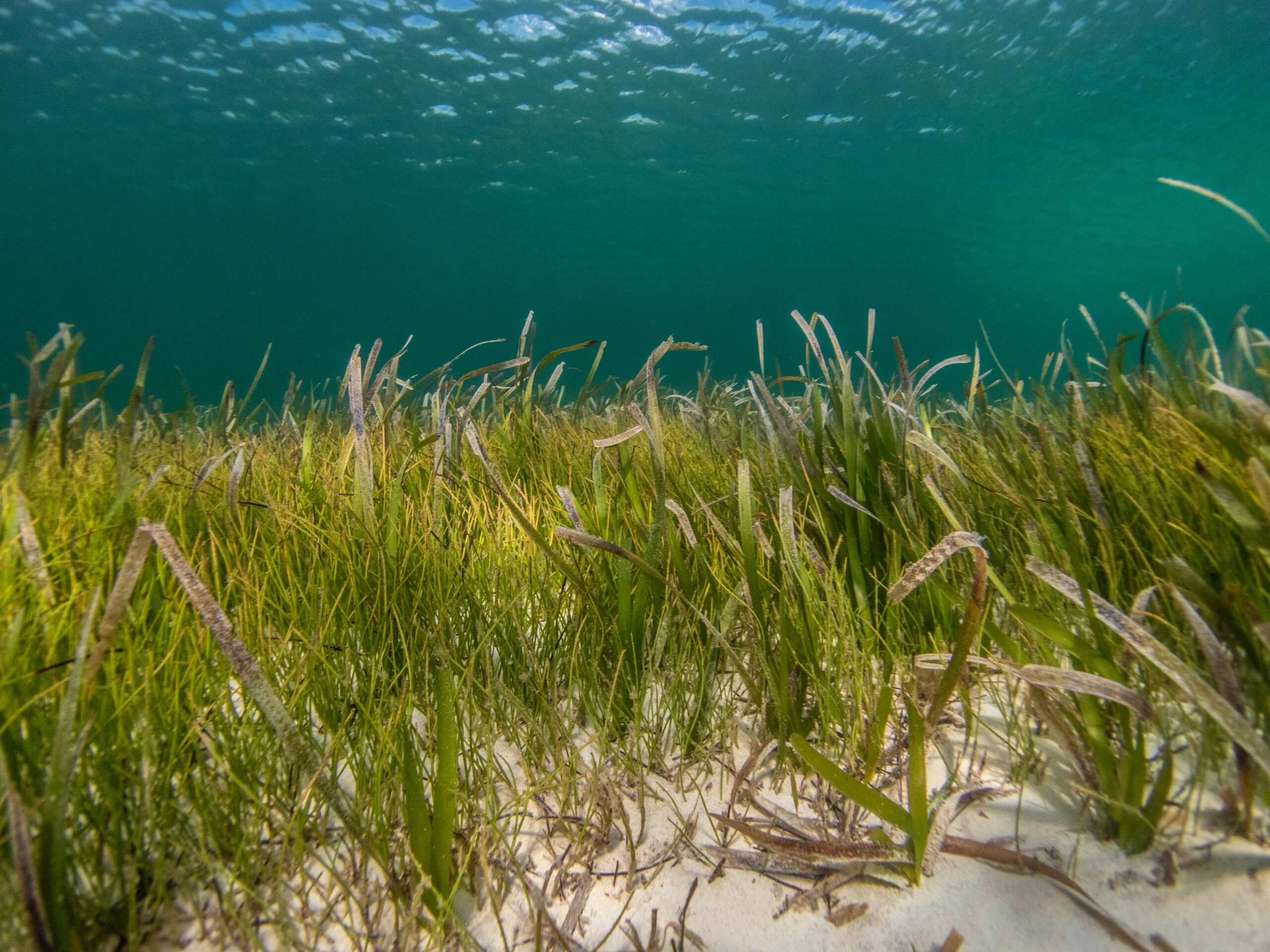
During a seagrass survey, all submerged aquatic vegetation (SAV) within the project’s area of influence is carefully examined, identified, mapped, and described. This process ensures that any construction activities comply with environmental guidelines and minimize potential impact on Florida’s protected marine ecosystems.
An XY Survey helps pinpoint the exact location of a proposed structure using X and Y coordinates, the horizontal and vertical points that define its position in a two-dimensional space. In marine construction, these coordinates are especially important because they show how far a structure will extend into a Florida waterway.
For most marine construction projects in Florida, XY Surveys are commonly requested by the U.S. Army Corps of Engineers (USACE), particularly by their Navigation Department. These surveys help confirm that new structures, such as docks, piers, or boat lifts, are properly positioned and do not interfere with navigation routes or neighboring properties.
When you’re ready to move forward with an XY Survey, you’ll usually share your project plans with your surveyor. Using those plans, the surveyor will calculate and include the precise XY coordinates of your proposed structure. This ensures your marine construction project permitting in Florida meets all regulatory requirements before approval.
Breezy Permits is able to handle the complete survey coordination permits process for marine construction projects from start to finish! With that being said, if a particular survey is being requested during the approval process for your project, our team can easily coordinate for this to be made out with one of our trusted vendors.
Hire our team for your marine construction permitting needs and experience the breeze of having our team by your side!
June 12, 2024

Building permit violations are typically issued by local building departments when construction work is completed without the required approvals or payment of associated fees. In the case of marine construction projects in Palm Beach or Broward County, these violations can be more complex because such projects must first receive environmental approvals before any local permits can be granted.
When a permit violation is issued, it usually includes a deadline for resolving the issue. Since marine projects involve multiple layers of approval, the process can take several months. To stay compliant and avoid penalties, or even potential legal action, it’s important to request an extension before each deadline until all requirements are met.
In both Palm Beach County and Broward County, marine construction approvals often involve the U.S. Army Corps of Engineers (ACOE) and the Florida Department of Environmental Protection (FDEP). Depending on your project location, additional approval may also be needed from the South Florida Water Management District (SFWMD) or the Lake Worth Drainage District (LWDD).
For projects located in Broward County, there are a few more steps. You’ll also need to obtain a Broward County Environmental Resource License and a Certificate of Competency before the violation can be fully resolved and the project brought into compliance.
When it comes to resolving a violation for a marine construction project in Palm Beach or Broward County, the first and most important step is securing approvals from both the Florida Department of Environmental Protection (FDEP) and the U.S. Army Corps of Engineers (ACOE).
If the work has already been completed before obtaining permits, the process involves submitting what’s called an after-the-fact application. As the name suggests, these applications are filed after construction has taken place. Normally, when permits are applied for in advance, both agencies can streamline the review through the FDEP’s State Programmatic General Permit (SPGP VI), a faster option that saves time. However, after-the-fact applications don’t qualify for this route, meaning the Army Corps must issue a separate approval.
This step is especially important because the Army Corps of Engineers can take around 6 to 9 months to issue approvals due to their review volume. That’s why submitting your application as soon as possible is critical to keeping your project on track and resolving the violation efficiently.
For the Army Corps, after-the-fact applications are submitted using the Application for Department of the Army Permit (ENG 4345) form. This can be sent by mail or email to the appropriate regulatory office. Once received, it typically takes 1 to 3 weeks for sorting and assignment to a project reviewer. After the project is assigned, applicants must wait 10 days before contacting the reviewer. At Breezy Permits, our team always reaches out once that window passes to confirm progress and maintain communication.
For the FDEP, after-the-fact applications can be submitted through their Self Service Portal (recommended) or by mailing the appropriate form to the local district office. The FDEP operates six regional districts across Florida to provide focused review and timely approvals: Northwest, Southwest, South, Southeast, Central, and Northeast.
Yes, your local building department can issue a violation if they discover any marine construction work completed without the proper permits. This applies to a wide range of projects, not just dock replacements.
In the marine construction inductry, violations can be issued for unpermitted work such as boat lift installations, dock repairs or replacements, piling replacements, seawall construction seawall repairs, or seawall cap installations.
Understanding these requirements before starting a project can save you from unnecessary delays, added costs, and stress later on. Taking the time to secure the right permits upfront helps ensure your project meets all local and environmental regulations, and keeps you clear of any potential violations.
If you’ve received a violation for completing a marine construction project without the required approvals, working with a marine construction permit specialist can make a major difference. These professionals understand the permitting process inside and out and can help you get your project back into compliance as quickly as possible.
Here are six key benefits of hiring a permit specialist to help resolve your violation in Palm Beach or Broward County:
Marine construction permit specialists have in-depth knowledge of the unique regulations that apply to docks, seawalls, boat lifts, and other waterfront structures. They understand the local, state, and federal rules that govern coastal construction in Florida, ensuring your project aligns with all required standards.
Submitting a permit application with missing or incorrect details can cause long delays. Specialists know exactly how to prepare and organize documentation so that it meets the expectations of the FDEP, Army Corps of Engineers, and local building departments. This helps keep your application process smooth and efficient.
Experienced permit specialists often maintain strong working relationships with local building departments and environmental agencies. These connections can help speed up communication, improve clarity during the review process, and in some cases, help move your application through faster.
Marine permitting often involves collaboration with engineers, surveyors, and environmental consultants. Permit specialists typically have an established network of trusted professionals, making it easier to coordinate the additional reports and assessments your project may need.
If your application receives a Request for Additional Information (RAI) or other agency feedback, a specialist knows how to respond quickly and effectively. Their experience allows them to address concerns, provide the right documentation, and minimize unnecessary delays.
Beyond handling paperwork, a permit specialist can offer valuable advice tailored to your project. Their understanding of local procedures helps you avoid common mistakes and stay compliant, saving both time and money in the long run.
May 9, 2024

Seagrasses play a vital role in Florida’s coastal environment, offering both ecological and economic value to the state. According to the Florida Department of Environmental Protection (FDEP), as outlined in their Guidance on Surveys for Potential Impacts to Submerged Aquatic Vegetation, seagrasses are considered essential to Florida’s oceans, gulfs, estuaries, and shorelines under Section 253.04(3)(a) of the Florida Statutes (F.S.).
Because of their importance, seagrasses are highly protected by regulatory agencies such as the FDEP and the U.S. Army Corps of Engineers (USACE). Both organizations have specific regulations in place to help preserve and maintain these critical underwater habitats.
When seagrasses are present at or near a proposed project site, a seagrass survey is typically required. This survey helps identify and map the current coverage of seagrass in the area before any marine construction work begins.
The FDEP requires reasonable assurance that permitted activities will not harm habitats essential to fish, wildlife, or listed species, including submerged aquatic vegetation (SAV). By submitting a seagrass survey, applicants provide the data regulators need to review potential project impacts. This allows agencies to determine if the project will have minimal environmental effect or if design changes are necessary to reduce harm.
A comprehensive survey must include all SAV resources that could be directly or indirectly affected by construction. Based on the survey results, regulatory agencies can recommend practical steps to avoid or minimize damage. In cases where impacts are unavoidable, mitigation measures may be required to ensure there is no net loss of vital environmental functions.
Across Florida, state agencies regularly conduct seagrass mapping to better understand where seagrasses are located and how healthy they are. For example, the Southwest Florida Water Management District conducts mapping projects “as a way to take the pulse of the estuary.”
Since seagrasses are highly sensitive to environmental conditions, their presence and health serve as key indicators of overall estuarine health. By monitoring changes in seagrass coverage over time, scientists and regulatory agencies can track the well-being of Florida’s marine ecosystems.
Even though Florida enjoys warm weather year-round, the FDEP has clear guidelines on the best time to conduct seagrass surveys to capture the most accurate data. Surveys should be performed during peak growing season, which typically falls between June 1 and September 30. This timeline aligns with federal monitoring standards.
Under certain conditions, however, the FDEP may accept surveys conducted between April and October in most parts of the state. For Monroe County and southern Miami-Dade County, surveys may be accepted year-round due to the consistently warm climate and stable marine conditions in those areas.
Based in Fort Pierce, Florida, Ardea Environmental Consultants is a small, women-owned firm offering a wide range of environmental services. Their team brings over 50 years of combined experience across Florida, Alabama, and Texas.
Their specialties include Seagrass and Benthic Resource Surveys, Wetland Delineations, Mangrove Assessments, Uniform Mitigation Assessment Method (UMAM) Analysis, Shorebird Surveys, and Dune Vegetation Surveys. Ardea’s extensive background makes them a reliable choice for projects that require detailed environmental documentation and regulatory coordination.
Waters Edge Marine Inspections is privately owned and operated by Norma Jean Jalovec, who personally conducts every dive. With more than 20 years of experience in marine construction, building, and construction law, Norma offers clients specialized insight into both the technical and regulatory aspects of marine projects. Her hands-on approach ensures accurate and thorough underwater inspections, including seagrass surveys.
Known for their expertise in seawall repair and marine construction services throughout South Florida, Hydros Marine Construction also provides seagrass surveys upon request. Their practical field experience and understanding of local permitting requirements make them a convenient option for property owners looking to complete both construction and environmental compliance through a single provider.
March 7, 2024

The permitting side of construction projects can be an extremely time consuming and daunting process, especially for contractors that are juggling multiple parts of their business while also looking to dedicate more time into the growth of their company. Every little piece, from doing the permitting research for your project, to actually completing the applications, and tracking the approval process while simultaneously keeping up with correspondence and revisions add up and take up hours of your time if you don’t have processes set in place to counteract this inevitable part of the business. The marine construction industry is an entirely different ball game because of the different approvals you need to obtain and because now, you’re not only dealing with the city like a lot of other construction projects but rather with bigger regulatory agencies that hold a lot more jurisdiction. In the state of Florida, the two main regulatory approvals needed for marine construction projects include United States Army Corps Approval (USACOE) and approval from the Florida Department of Environmental Protection, but depending on your exact project site you might also have to obtain approvals from local regulatory agencies. Some examples of local regulatory agencies with jurisdiction specifically in South Florida include the South Florida Water Management District (SFMWD), Lake Worth Drainage District, Broward County Environmental Resource Protected, and DERM. Army Corps approval is typically the longest and can take anywhere from 3-6 months, while approval from the FDEP generally takes between 1-2 months.
Regardless of the regulatory agencies you’ll be required to submit to for your projects the entire permitting process can easily become a daunting task but by taking the time to hire a team of permit specialists that are qualified in the industry and specialize in marine construction, you can save your team a lot of both time, and energy that can be used to fuel the growth of your business. Our team here at Breezy Permits understands exactly how important it is to have a permitting team you can trust and throughout this article we’ll be highlighting the top 5 reasons (although there are many more) to choose Breezy Permits for your marine construction permit processing.
The quicker your application gets in the system, the quicker you’ll be assigned to a reviewer for your project and the closer you are to obtaining approval for your project. In the marine construction industry, obtaining regulatory review can be the most time consuming aspect of the entire process. Army Corps approval can take up to 6 months on some projects, and FDEP approval anywhere from 1-4 months, depending on your project site. The first thing we can do to get your projects approved as soon as possible is to get your permit package ready for signatures and we do this within 24 hrs of receiving payment here at Breezy Permits. Then, as soon as we receive signatures on the permit package we’ll be able to submit to the regulatory agencies for your project.
In our experience, responsiveness and keeping up with correspondence is key to success in this industry. With the construction permitting process, a lot of this correspondence comes in via email and one thing we take pride in here is being extremely responsive with everything that comes into our inbox. We clear our inbox multiple times per day, ensuring that nothing is missed and any revisions/comments that come in are responded to as soon as possible so that your projects can continue with the review process.
Marine construction permits can often become overwhelming not only because of the various approvals you often have to obtain but also because of the array of supplemental information that is requested along the way that’s specific to the industry and can easily be confusing to someone who isn’t familiar with the field. For example, one of the most important tasks in the permitting side of marine construction projects is ensuring that you obtain the necessary approvals from ALL regulatory agencies that have jurisdiction over your project site. In South Florida these approvals range from Army Corps, DERM, Florida Department of Environmental Protection (FDEP), South Florida Water Management District (SFWMD), and a few others. By failing to obtain a permit with an agency that has jurisdiction over your project, you’ll end up holding your project up because the city will not approve your project and issue your permit without the necessary regulatory approvals submitted for review. Not only that, but each agency has their own specific processes and form submittal requirements etc. Because of all of this, when you’re looking to outsource the permitting side of your projects it is important to do your due diligence and hire a team of specialists in marine construction to save yourself time, the headache, and oftentimes money in the long run. Our team here specializes in marine construction projects and is dedicated to being professionals in the industry.
We understand that when you’re a busy company with multiple projects going on at different stages, it can be difficult to find the manpower for labor let alone to have someone stand at a project site waiting on an inspector. By hiring an inspection team to oversee your inspections you can save your team time and money. Rather than paying someone to stand at a job site when they could be working on completing an important project on your priority list, you can outsource this and take the headache of the inspection process off of your shoulders. Our team currently offers inspection scheduling services for the marine construction industry.
When your plate is filled with all of the daily tasks that are inevitably tied to running a construction business, it is easy to lose track of where exactly each project stands if your team doesn’t have an effective strategy set in place for this. Because of that, we’ve found that weekly end of week updates on ALL of your projects undergoing the permitting process with our team is beneficial to all parties involved. First off, it ensures that our team goes through all of your projects individually on a week by week basis and that tasks stay top of mind. Secondly, weekly updates ensure that you stay in the loop of exactly where your projects undergoing the permitting process with our team stand. In our weekly updates we include just enough information to get to the point without overloading you with all aspects of your project. For example, we include the following: owner’s name, municipality, items needed (from your team), and the latest status on your project.
When you have an effective team taking care of your permitting processes, the entire dynamic of your projects can change. The permitting process is oftentimes the most tedious part of the process and having someone who you know is going to handle projects as if they were their own can save your team a plentitude of time that can be used to fuel more and more growth within your business. Our team here at Breezy Permits takes pride in providing the utmost level of service and maintaining this level of integrity throughout every project that goes under the care of our team.
January 17, 2024

Seagrasses play a vital role to our Florida aquatic systems. Not only do they provide habitat and food to a plentitude of marine species but they also help ensure our waters remain clear by capturing and filtering out tiny sediments found in the water. Because of both the ecological and economical role that seagrasses play in our ecosystems, regulations are set in place by regulatory agencies such as the Florida Department of Environmental Protection and the United States Army Corps of Engineers in order to ensure that they stay protected for now and for future generations. Regulations come in the form of specialized criteria for construction being completed in these areas, and also for the boating community to ensure that extra precaution is taken in these areas. If you’re a marine contractor in the industry and you have completed a project in an area that is surrounded by seagrasses then you’re likely familiar with the extent to which seagrasses are protected and how strict regulatory agencies can be when a project is being completed in an area that seagrasses are found.. Throughout this article we will discuss both the economical and ecological role that seagrasses play along with some examples of guidelines enforced by regulatory agencies to make sure seagrasses stay protected.
Sea grasses are important to the Florida economy because of the habitat, nursery grounds, and food source that they provide to economically important species along our coastlines. There are a plentitude of species that rely on seagrasses which some of these including:
Not only do protected species such as manatees rely on seagrasses as a major food source, but “Seagrasses are typically considered a nursery habitat that provides structure for various life stages of commercially and economically important fish (such as drums and trout), crustaceans (stone crabs, shrimp, etc.), and shellfish (scallops, etc.) species” as stated by the Florida Fish and Wildlife Conservation Commision. Our Florida coastlines are blessed with an abundance of marine wildlife that attracts hundred of thousands of tourist yearly and the FDEP directly states in their ERP Online Help Resource that “In 2006 alone, seagrass communities in Florida supported an estimated harvest of $71.4 million for stone crab, spiny lobster, yellowtail snapper, gray snapper, shrimp and blue crab.” With that statistic alone it is evident that seagrasses are vital to our economy and we can begin to understand why they are so protected by regulatory agencies throughout the state of Florida. In an effort to highlight this economic importance and showcase why their protection is vital, the FDEP estimates that each acre of seagrass has an economic value of $20,500 per year. With Florida being home to an estimated 502,000 acres of seagrass, we can estimate that seagrasses along our Florida coastlines hold an economic value of $1,029,000,000.
Although the economic role seagrasses play along our coastlines might seem like the primary driving factor to their protection by regulatory agencies, their ecological role throughout the state of Florida is also important to understand. The ecological role seagrasses play along our coastlines is highlighted with their importance as a food source, habitat, and the part they play in maintaining water quality. In an effort to showcase this, the FDEP states in their Management and Protection of Seagrasses article that “Seagrasses improve water clarity by stabilizing bottom sediments and absorbing nutrients from the water column. They reduce coastal erosion by helping to diffuse wave energy during storm events.” Every year tourists come from all over the world to enjoy the beautiful and clear water that we are blessed to have here in Florida and the protection of seagrasses is an important aspect to ensuring that our waters remain clear. Not only do they play a vital role in minimizing erosion and filtering out tiny sediments to ensure our water remains clear, but they’re also an important food source and habitat for a plentitude of species.
After reading this article you should begin to see why the protection of seagrasses is extremely important throughout the State of Florida. Because of this, regulatory agencies such as the FDEP and the USACOE have guidelines set in place for construction being done in any site where seagrasses are present. The FDEP directly showcases different ways to protect seagrasses in their ERP Online Help Resource by recommending the following:
The United States Army Corps of Engineers also showcases their criteria in their Dock Construction Guideline for Single Family Docks Article published in 2001, with some of their criteria for docks being constructed over submerged aquatic vegetation including the following:
November 8, 2023

When you’re preparing for a new marine construction project in the state of Florida you have to keep the permitting process and the different approvals you will be required to obtain in the front of your mind. No construction project can begin without the necessary permits and approvals, unless of course you’re skipping this process which is not recommended since doing this can end up being extremely costly in the end. Permits are set in place to ensure that projects are being built up to Florida Code in order to protect everyone involved and in the world of marine construction, approvals from the Florida Department of Environmental Protection and the Army Corps are required on top of your local approvals in order to make sure that potential impacts to the environment are minimized as much as possible and our resources are protected for future generations. That being said, the approvals you will be required to obtain for marine construction typically consist of State (FDEP), Federal (USACOE), and local (specific municipality & county if applicable). For example, we recently obtained permits for 3 boat-lifts on a commercial dock with existing slips and we were required to obtain FDEP approval, USACOE approval (which we streamlined through the FDEP), DERM approval, and then approval from the specific municipality (in this case, City of Sunny Isles).
Federal approvals from the USACOE typically take the longest to obtain with the Army Corps directly claiming that the typical time it takes them to process an application is between 3-4 months. In an effort to streamline approvals and handle incoming projects with increased efficiency, the State Programmatic General Program (SPGP) was implemented in July of 2017 by the Corps and authorizes 5 types of activities: Shoreline Stabilization, Boat ramps, docks, boat-lifts. Not every project that falls within those categories is applicable for this approval but if your project is then this essentially allows the FDEP and other agencies to grant your federal approval on behalf of the Army Corps, therefore eliminating the need to submit an individual application to the Corps and having to go through the potential 3-4 month approval period. The agencies allowed to issue this approval include the FDEP, the St. Johns River Water Management District, Hillsborough County, Broward County, and the Southwest Florida Water Management District. The most common agency to go through for this is the FDEP and the FDEP claims to make reasonable efforts to process applications within 30-60 days depending on if you’re applying for an exemption, general permit, or an individual permit. With that being said, if your project manager has everything that they need to complete their review and your project is applicable for SPGP approval, you could obtain your federal and state approvals in under a month!!
In order to make a preliminary decision on whether or not your project will be applicable for this approval and on whether or not we should collect the necessary forms, one of the first things we will do is check the distance from your project site to the nearest federal channel. As a general guideline, if your project is farther than 300 ft from a federal channel then we will go ahead and gather all of the supplemental forms that the project manager might need to review your project for SPGP approval and we will submit these forms along with our initial FDEP application.
A useful tool we use for this is the FDEPs MapDirect tool which allows you to create different overlays on the program for what you’re trying to check for in your area.
Although the initial process of screening your project site and checking the nearby resources in the area for potential SPGP approval along with gathering and filling out the supplemental forms we will be submitting may take up more time in the beginning, in the long run streamlining your approvals through the FDEP and obtaining SPGP approval will get your projects started a lot quicker and efficiently leaving all parties involved with increased satisfaction.
If you don’t already outsource the permitting side of your business then now might be the perfect time for you and your team to start!! By doing your due diligence with the permitting process and covering all your bases on the different options available, you can save your team a lot of time and unnecessary headaches. The permitting process can be a daunting and time-consuming process consisting of a lot of back and forth correspondence that a busy contractor or team member handling other aspects of your business can find to be very overwhelming. By hiring a team that specializes in getting your permits approved as quickly as possible, you can completely change the dynamic of your team and reclaim your energy and direct it towards the things that truly drive your growth!!
We are constantly learning and evolving along with the agencies and the local municipalities throughout the State of Florida and we understand the importance of maintaining this mentality when you’re dealing with the permitting side of projects. With that being said, our team here truly does everything possible to ensure that your team has a positive experience. We know how much time and energy it can save you if we can streamline your federal approvals through the FDEP and we always do the work to make sure that this can be done if your project is applicable!!
October 18, 2023

Permit approvals for marine construction projects can be a time consuming and oftentimes confusing process because of the multiple applications that are required to be submitted, with each entity having a different set of protocols for their applications and for correspondence. Because of this, contractors and homeowners might choose to skip obtaining a necessary permit and as a consequence, end up reaping a lot of negative consequences. From personal experience, I have witnessed that you should never skip obtaining all of your necessary permits for your projects, especially not your federal approval from the Army Corps. When you’re preparing for a marine construction project (i.e. commercial/residential docks, seawalls, riprap, boat lifts, ramps, & other associated structures) you should always keep in mind that anyone planning to work or discharge dredged or fill material within navigable waters of the United States must obtain a permit from the Corps of Engineers. Sometimes, your army corps approvals can be streamlined through the FDEP, but this is dependent on your project site and on if your project meets the Project Design Criteria’s (PDC’s) required to obtain SPGP approval. However, if your project is not a candidate for SPGP approval, then it is crucial to understand that you will need to obtain a separate approval from the cops. Then once you submit to the corps, your project will either be applicable for an individual or a general permit. Much like with the FDEP, an individual permit requires more in depth processing, and a general permit will be used to authorize minor activities without the need for individual processing.
Regardless of if your project will qualify for a general permit, or if it will have to undergo individual permit processing, the main point that is important to understand is that you should never skip obtaining approvals from any agency when you fall within their jurisdiction. This is because when you move forward with a project without obtaining required approvals you will automatically be in violation of the law and could be forced to pay hefty fines or in some cases even be forced to restore the area back to the way it was pre-construction. For the purposes of this article, if you skip obtaining a permit with the Army Corps then you’ll be in violation of federal law.
The United States Army Corps of Engineers directly states that “Any person, firm, or agency (including Federal, state, and local government agencies) planning to work in navigable waters of the United States, or discharge (dump, place, deposit) dredged or fill material in waters of the United States, including wetlands, must first obtain a permit from the Corps of Engineers.”
For marine construction projects multiple applications are required to be submitted, with these applications typically consisting of local, state, and federal approvals. Sometimes there are delegation agreements between either local or state governments and the Corps that allow them to issue approval on behalf of the USACOE but if your project is not applicable for this it is important to remember that you’ll still have to go through the process of obtaining a permit through the Army Corps themselves and you will be responsible for submitting an individual application directly to the Corps. Even if you’ve already obtained your local and state approvals, you are still responsible for obtaining a separate approval from the Army Corps if the scope of work for your project requires this.
If you would prefer to eliminate the need for army corps approval for your project then there are some ways that you can design your project to eliminate the need for a Corps permit. For example, if your project is in an area of tidal waters, the best way to avoid the need for a permit is to select a site that is above the high tide line and avoids wetlands or other water-bodies. If your project is within fresh water, then you can avoid the need for a permit with the corps by staying above the ordinary high water line and avoiding wetlands adjacent to the stream or lake.
The likelihood of your application submitted to the Army Corps being denied is 1% (likely even less). The Army Corps directly states that nationwide less than one percent of all requests for permits are denied and those who have been denied usually have refused to change the design, timing, or location of the proposed activity. With that being said, if for some reason your project design is one that will be denied for approval then the project manager that is handling the approval process for the project will assist you in navigating your project design to one that is applicable for approval. It is important to comply with any regulations and requirements given by your project manager in order to ensure that the design of your project won’t negatively impact the surrounding ecosystems and environment. Typically the USACOE takes 3-4 months for permit processing therefore make sure to get those applications in as soon as possible so that you can get your approvals and projects started as soon as possible.
Our process here starts with seeing if your project is applicable for State Programmatic General Permit (SPGP) approval which streamlines your Corps approval through the Florida Department of Environmental Protection (FDEP). If your project is further than 300 ft from any federal channels then we go ahead and attempt to obtain SPGP approval for your project, providing everything that your FDEP project manager will need to process this approval if your project is applicable. In order to make sure we are streamlining the process and are as efficient as possible, we always also go ahead and sent an individual application to the Army Corps for processing in case your project ends up getting denied for SPGP approval that way we can make sure to cover all bases and have your application assigned to a project manager since the Army Corps does tend to take the longest to process approvals. When/if we do end up obtaining SPGP approval for your project, we will also always make sure to let the USACOE proejct manager assigned to your project know that we have obtained this approval so that they can delete the application and stop further processing.
October 10, 2023

Anyone who has been living in Florida for over a year is likely familiar with the time of year that the snowbirds come down to Florida which many like to refer to as the “Florida Season.” This season is formally considered to be from October-April, and it is an impossible time of year to miss with the changes in population and traffic being so drastic.
A lot of the “snowbirds” that come down to Florida during this time of year are waterfront property owners and since they’re only in town seasonally, the majority of them utilize this time that they are in town to get upgrades, repairs, etc. on their homes. This is one of the main reasons that the marine construction industry tends to get a lot of momentum during this time of year since a lot of these property owners are looking to install boat lifts to protect their vessels, docks to facilitate their waterfront access, complete repairs on existing seawalls before hurricane season. begins, and a wide array of other needs that would entail a qualified marine contractor to complete the work. If you’re an experienced marine contractor, then you’re more than likely familiar with the permitting process and the different applications that are required to be submitted when you’re completing projects within Florida & Federal waters which can add up to be an extremely time consuming process when piled on top of all of the day-to-day aspects of running a marine construction business.
If you’re reading this and you are someone that spends hours on the back end of their business focusing on the permitting side of your projects then outsourcing your permitting work for your projects is one of the best things you can do to free up your time!! Truth is, if you take the time to ask yourself which aspects of your business you truly enjoy doing then dealing with the permitting process and the paperwork it entails is likely at the BOTTOM of your list of things you enjoy doing within your business. By hiring a team of specialists and outsourcing this part of your work you’ll reap the benefits of maximizing your time, having a team to handle project management aspects of your projects, and a quicker turnover rate on your permit approvals as a direct result of having a team that dedicates their time to your projects getting started.
The first benefit and in my opinion the biggest benefit to outsourcing your permitting work, especially during these next couple of months, is the ability to free up your time. Outsourcing different aspects within your business allow you to take a step back and work on your business instead of in your business. When you’re running a business you go through seasons where you start to build a lot of momentum and by implementing processes within your business that allow you take a step back and prioritize your time, you’re able to gain clarity on exactly what you need to do on a day-to-day basis. Oftentimes, for contractors that does not include sitting behind a computer for hours dealing with the back and forth correspondence that inevitably comes along with the permitting process.
Time is your most valuable asset, and by outsourcing your permitting work and freeing up your time you’re able to focus on aspects within your business that are more valuable and directly drive your sales such as customer interaction and different marketing ideas that you probably have in your back pocket and haven’t gotten around to simply because you don’t have the “time”. If you’re someone who constantly finds themselves putting things aside and maybe even missing deadlines within your business simply because you’re so involved in aspects that you could hire a team to take care of, then outsourcing your permitting work to a qualified team is the perfect and a big place to start that could really change the dynamic of your business in the best way possible.
This second benefit goes hand-in-hand with the idea of maximizing your time. When you hire a team to take care of the permitting process with you, there is someone taking care of project management aspects of your project for you, which is inevitably time consuming. Our team here at Breezy Permits handles all of the correspondence that takes place within the permitting process while aiming to streamline the process as much as possible for you. Of course our exact processes vary depending on the scope of work but typically our process for marine construction projects is as follows:
1. Research + Obtain Correct Permit Application(s) & Supplemental Documents: Our process starts with obtaining the correct permit applications and any supplemental documents that could be required for your projects. This part of the permitting process alone can take us a lot of time if you’re unfamiliar with the municipality that your project is in since there are different ways to access the forms/documents with each municipality. In some cases the only way to access the forms is by having a building department permit official send them over through email, which can be tedious for a busy contractor with a busy team.
2. Fill out Application(s) + Collect Signatures : Next, after obtaining the proper application for the city your project will be in, we fill out the applications and collect signatures from both the contractor and the homeowner. Our team here is also able to offer online notary services for the applications, which is super simple and convenient if you’re ever in need of it.
3. Submit your Applications + Track Approval Process: After getting all the necessary signatures and receiving the plans/drawings for your project we go ahead and submit your applications. Once you submit your applications you’re always assigned to a reviewer that is taking care of your project and you need to make sure that someone is staying on top of the correspondence and any reviews that the reviewer may need for your project in order to prevent any unnecessary delays. This is the same for both environmental entity applications and City applications. Not only do we make sure to stay up to date on all comments + reviews, but we also keep you updated on the status of your project along the way, that way we know that at the end of the day you have a piece of mind on the status of your projects.
4. Record your NOC : We also record your Notice of Commencement after collecting signatures on it, making sure that you receive your certified copy to post at the job site for your first inspection.
5. Send Approved Permit Documents : Lastly, after the process has been complete and we have received the approved permit for your project we will send over the approved permit documents.
If you currently take care of the permitting process in house then you’re inevitably familiar with the fact that the entire process detailed above typically requires a lot of back and forth correspondence throughout the entirety of the permitting process. Oftentimes business owners tend to overlook the fact that these time consuming aspects of their business aren’t the aspects that are directly driving the growth of their business. The reality is that many business owners tend to wear all the hats rather than taking a step back and realizing that their time is best spent doing the things within their business that they enjoy and that are driving their sales and growth. Outsourcing the right things within your business could be life changing for you and your team. If you find yourself struggling to constantly juggle every aspect of your business, then outsourcing your permitting work to a qualified team that can dedicate their time to handling project management aspects of your projects, will leave you with a huge weight taken off of your shoulders.
The last benefit on our list is directly correlated to the fact that by hiring a team of specialists for the permitting side of your projects, you automatically have someone dedicating and focusing their time on making sure your projects get approved. This inevitably leads to a quicker turn over rate on your projects, which will make all parties involved filled with satisfaction.
When you have a quicker turnover rate on your projects, not only are you able to generate more business, but your clients will be happier than ever. Oftentimes the permitting process for marine construction projects can be lengthy but by handing this over to a team of specialists you can significantly streamline the process.
When you outsource your permits to a team of specialists you allow room for your business to grow! It is easy to get sucked into the day-to-day of your business but it is important to take a step back and reflect on the things that are taking up the most of your time, and then taking the time to ask yourself which of these things are truly driving your business forward. Oftentimes, the parts of your work that are truly driving the growth and momentum in your business aren’t centered around day-to-day email correspondence and tracking the approval process for your permits. By taking the time to be honest with yourself and focusing on the things that are directly correlated to the growth of your company while simultaneously outsourcing the aspects that could be handed off to someone who specializes in that kind of work, you can significantly change the dynamic of your business and your life for the better.
Time is life’s most valuable currency, are you prioritizing your time and putting it where it matters most? If your answer is no and part of your headaches stem from the permitting side of your business, then it might be time to outsource your permits to a specialized team!!! (then I’ll backlink our website where it says specialized team)
October 5, 2023

It’s no secret that one of the greatest luxuries of living in Florida is being surrounded by our beautiful coastlines, which I think we can all agree is one of the top driving incentives that is pushing more and more people to move down here, especially those looking to build or improve waterfront properties that require the proper permits! Well, that and the fact that we pretty much completely skip the winter season while other states throughout the country are quite literally frozen during that time of the year.This idea behind a year-long summer is one that people have been increasingly romanticizing, and after living in Florida my whole life I have personally witnessed an increase in the amount of people moving here with an attempt to get closer to the ‘tropical’ lifestyle it provides compared to that of their home states.
With such a high increase in the number of people moving down to Florida, and a large number of these individuals being part of the higher class, there is a direct correlation with the increase in purchasing waterfront properties. Since there is such an increase in the amount of waterfront properties looking to be bought, there is also a constant demand for marine contractors to build docks, seawalls, and boat lifts for properties along the coastline. But, it is important to note that before any Dock Construction or Seawall Construction project is able to start, you must obtain the proper permits for your project. This can become tricky when you’re dealing with marine construction, but it is a crucial step that should never be overlooked—the consequences are just not worth it.
Although the permitting process is a crucial component of completing a new marine construction project, the different approvals required for every project can make it very time-consuming for a contractor with multiple projects or for a homeowner who does not understand the ins and outs of the process. Because of this, outsourcing this part of the process to a qualified marine permit expeditor who specializes in Dock Construction and Seawall Construction can significantly streamline your approvals!
A marine construction permitting expert will fill out applications on your behalf, walk you through all the required submissions for your project, and connect you with the right contacts to get things done. In this post, we’ll highlight the 9 common requirements you may need to meet to obtain a permit for a dock, seawall, or boat lift in Florida. After reading this, you should have a clear understanding of what these requirements involve and why they are necessary for your Dock and Seawall Construction project.
A survey is an important document you’ll be required to provide for all your dock, seawall, or boat-lift permits. Your survey must be signed, sealed, and sometimes it can be requested for it dated within the last 6 months. Typically, the survey for marine construction surveys is a “boundary survey.” Not only do surveys provide valuable information to the city regarding whether or not your project meets local regulations by outlining boundaries and characteristics of the land, but they also help ensure that no state laws are being violated.
Plans and specifications are important to make sure local and state codes are followed. These must also be signed and sealed, and it can be done digitally in this case. With plans & specifications of your seawall, dock, or boatlift project the city is able to get an idea of the scope of work that’s being done. The specifics on what you might be required to include in your plans can be different with each municipality and entity, and for that reason it’s usually a good idea to hire a qualified marine permit expeditor to help streamline this process for you and make sure you’re submitting everything that’s required correctly so your project can get started as quickly and seamlessly as possible.
An executed contract is important to show that the contract for the project that you’re about to begin has been signed and is a legally binding contract. Both the contractor and the property owner must have their signatures on the contract for it to be official. This is important to show that both parties have come to an agreement on the project that’s planning on being done.
The notice of commencement is an important document filled in county records (oftentimes at the courthouse) to show that a project is starting. This is an essential part of the permitting process, and without properly filling a Notice of Commencement you may even have to pay twice for improvements on the property.
The POA Approval is an important document that you need to have when you’re planning on completing a new dock, seawall, or boat-lift project. This is because your POA Approval is State Certified by the Florida Building Commission, and as a result works as an important tool for builders, inspectors, architects, and for building department officials to be able to verify that your products meet the standards required by Florida Building Code. One example of this is with new boat lift installations in the City of Boca Raton. For example, when permitting a new boat lift with the City of Boca Raton, they request for the following to be provided: Product submittals and installation instructions for the boat lift.
Every Florida Municipality has their own specific permit application that you’ll be required to submit. It is important to note that any contractor completing a new project must submit their contractor registration to be registered with that specific municipality.
This is one of the South Florida entities you may be required to submit to for your dock, seawall, or boat-lift permits. The purpose of this entity is to protect our Florida waters. Any project that will result in waste being discharged into water, or expects to be a source of any type of water pollution must make sure to obtain a permit with this department.
The United States Army Corps of Engineers (USACOE) is another one of the South Florida entities that you may be required to submit to for your dock, seawall, or boatlift permits. It is important to obtain a permit with the USACOE whenever your project is within navigable waters.
This is another one of the entities that you might be required to submit to for your dock, seawall, or boat-lift permits depending on your project and location. The purpose of submitting to this entity is to protect the wetlands and other water sources, to ensure that water quality is protected from stormwater pollution, and to prevent flooding.
After reading this article you should have a better idea of what the common requirements are and what the purpose behind each one is for obtaining a boat lift, dock, or seawall permit. There are a lot of technicalities and extra paperwork that’s required to be done when filling for marine permits vs other types of permitting projects. By finding a Qualified Marine Permit Expeditor like Breezy Permits you’ll be able to focus on the project that is being done rather than all the extensive technicalities that can come along with marine permitting!
The Lake Worth Drainage District is another entity you might have to obtain approvals from, depending on where your project site is located. The LWDD directly states all projects within LWDD boundaries, regardless of size or location, require review by the LWDD. In order to offer assistance to applicants who are wondering whether or not their project falls under a LWDD service area the LWDD has a published Lake Worth Drainage District Maintained Canal Elevations Map, with all LWDD service areas highlighted on the map.
In conclusion, when our team receives a submittal for a new project located within Palm Beach County, we always check if we need permits from the Army Corps (USACOE), Florida Department of Environmental Protection (FDEP) , South Florida Water Management District (SFWMD), and the Lake Worth Drainage District. By checking this in the beginning of the process, we can ensure that all applications are submitted as soon as possible, minimizing the likelihood of anything holding your project up from approval at the time of submitting to the city.
October 5, 2023

MEET THE FOUNDER
Growing up in beautiful Palm Beach, Florida, I’ve always had a deep connection to our state’s stunning coastlines and vibrant marine life. This love for our beaches inspired me to dedicate my career to supporting projects that not only build and enhance our waterfronts but also respect and protect the ecosystems that make Florida so special. At Breezy Permits, my goal is simple: to take the stress out of permitting for your marine construction projects. Let’s work together to make your projects a breeze!
Ready to Make Permitting a Breeze?
From simplifying the permitting process to managing every detail, Breezy Permits is here to save you time, reduce frustration, and get your project moving. Whether you’re tackling a dock installation, seawall repair, or any other waterfront project, we’re ready to help.
OR