April 19, 2026
Florida Living Shoreline Law: What Property Owners Need to Know
By Ileen Gonzalez
Exploring how senate bill 302 is changing the permitting process and unlocking grant funding statewide.
On March 19th, Ron DeSantis signed Senate Bill 302 into law. It takes effect July 1st. And if you own waterfront property in Florida, this is something you need to understand before that date arrives, especially if you are planning a living shoreline installation, seawall repair, or shoreline stabilization project.
For years, one of the biggest barriers to installing a living shoreline in Florida has not necessarily been the cost of the project itself, but rather the complexity of navigating the coastal permitting in Florida. Because agencies were more familiar with traditional concrete seawalls, those projects moved faster through the approval process while living shoreline permits were reviewed case by case, often requiring additional environmental studies that created longer and less predictable timelines.
For property owners who wanted to pursue a nature based shoreline solution, the process was simply harder to manage than a conventional seawall repair permit or waterfront construction approval, and that inconsistency became a real obstacle to wider adoption across the state.
This new law is designed to change that and simplify Florida shoreline permitting services.
What Senate Bill 302 Actually Does
Senate Bill 302 requires the Florida Department of Environmental Protection to create a dedicated living shoreline permitting process that includes a faster application review. This is a meaningful shift away from the case by case approach that has historically made these projects more difficult and time consuming to navigate.
The law covers a wide range of nature based shoreline protection solutions, including mangrove restoration, oyster reef rehabilitation, and newer technologies like 3D printed seawalls designed to mimic natural habitat and provide surfaces for coral and algae growth. It also calls on FDEP to actively incentivize the adoption of these newer technologies, signaling a clear shift in how the state approaches coastal protection and shoreline resilience.
As the department noted when the bill was signed, the legislation streamlines processes so it can carry out approvals more efficiently while maintaining strong environmental protections. For property owners, this means a more predictable path for permit approvals, project timelines, and shoreline development planning.
Access to Resilient Florida Grant Funding
Beyond streamlining the permitting process, Senate Bill 302 addresses another major barrier: funding.
Living shoreline projects now qualify for Resilient Florida grant funding, part of a pool exceeding $200 million that was previously reserved for projects like road raising, dune reconstruction, and stormwater infrastructure.
For waterfront property owners, HOAs, and local governments, this opens up a meaningful new opportunity to:
- Reduce overall project costs
- Access funding for shoreline stabilization
- Invest in long term coastal protection solutions
If you have been delaying a living shoreline project due to cost or permitting uncertainty, this change creates a more accessible pathway, especially when working with an experienced permit consultant or coastal permitting service provider.
The combination of a streamlined permitting process and access to dedicated funding creates a much clearer path forward for property owners who have been considering a living shoreline but were unsure where to start.
Momentum Is Building at the Local Level Too
The timing of this new state law is significant because momentum is also building at the local level across South Florida.
The City of Fort Lauderdale is preparing to launch its own living seawall incentive program in Spring 2026 that would cover 100% of base permit fees for qualifying installations on a first come first served basis. The program is also expected to include an expedited review process for these projects, making permit approvals faster and more accessible.
From October 2023 to October 2025, there were 176 seawall permits in Fort Lauderdale, but only one was a living seawall. Programs like this, combined with the new state law, are designed to change that trend significantly and increase demand for living shoreline installations and eco friendly seawall alternatives.
What is happening in Fort Lauderdale reflects a broader shift across Florida. Local governments are beginning to actively support and incentivize living shoreline projects in ways that were not available just a few years ago.
Why This Matters for South Florida Waterfront Properties
For decades, the default solution for shoreline protection in Florida has been concrete. Seawalls are effective at protecting property from erosion and storm surge, but they offer very little benefit to the surrounding marine ecosystem.
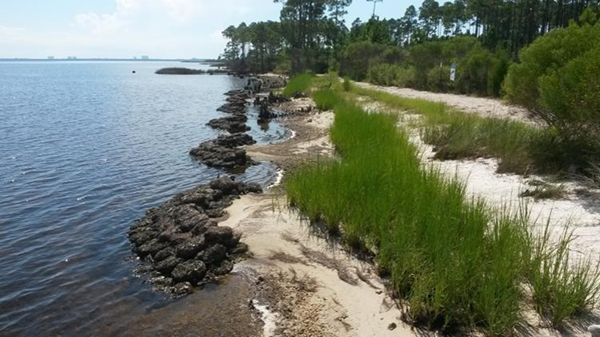
Living shorelines take a different approach, working with natural systems to stabilize shorelines, restore marine habitat, and improve water quality at the same time. This makes them an increasingly preferred option for sustainable waterfront development in Florida.
As leaders involved in shaping the legislation have noted, the goal is to create a structure that normalizes living shorelines and brings consistency to the process so that property owners and local governments have a clear and reliable pathway to move these projects forward.
For property owners, this means:
- Faster and more predictable permitting timelines
- Greater access to funding and grants
- Increased long term property value
- Stronger protection against erosion and storm impact
The real impact of this law will depend on how FDEP implements the new permitting framework. But the direction is clear. Florida is moving toward nature based shoreline solutions that are easier to permit, fund, and build.
Ready to Start the Conversation?
At Breezy Permits, we have already been navigating living shoreline permits, seawall approvals, and coastal construction permits across South Florida. We understand the agencies, the requirements, and how to move projects forward without unnecessary delays.
If you are considering:
- A living shoreline installation
- Seawall repair or replacement
- Waterfront property development or upgrades
Now is the time to start.
With Senate Bill 302 taking effect July 1st, the permitting pathway is becoming clearer, funding is available, and early action can help you secure faster approvals.
Ready to Make Permitting a Breeze?
Let’s Take the Stress Out of Your Next Marine Construction Project
From simplifying the permitting process to managing every detail, Breezy Permits is here to save you time, reduce frustration, and get your project moving. Whether you’re tackling a dock installation, seawall repair, or any other waterfront project, we’re ready to help.
OR