September 7, 2026
How Long Do Florida Dock Permits Take in 2026?
By Ileen Gonzalez
If you’re planning a dock, seawall, or boat lift project, the honest answer is that most permits take 6 to 12 weeks from submission to approval. Some smaller projects clear in a few weeks. Larger or more complex ones can take several months. The frustrating truth is that nobody can give you an exact number on day one, because your timeline depends on your specific project, your specific site, and how your application performs once it’s actually in front of a reviewer.
What we can do is walk you through what actually drives that range, so you can plan around it instead of guessing.
Your Project Size Sets the Floor
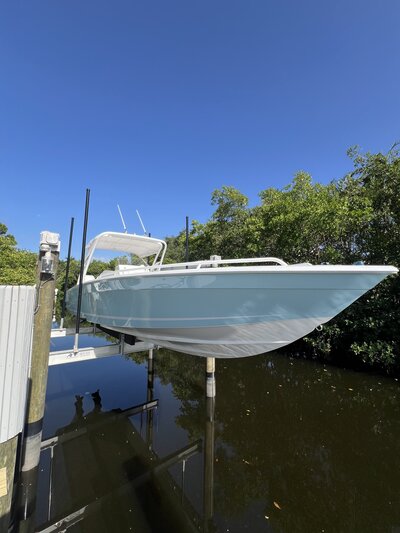
The single biggest factor in how long your permit takes is how big and how invasive your project is. A boat lift installation or a seawall repair that stays close to the existing footprint moves through review fast, often in a matter of weeks, because it qualifies for a simplified path at both the county and state level. A new dock, a seawall replacement that changes the shoreline, or anything with a larger footprint moves into a more thorough review, and that review simply takes longer no matter how well-prepared your application is.
If you want the full breakdown of which agencies get involved and why the tier you fall into matters so much, we cover that in detail in our FDEP vs. USACE guide. For timeline planning purposes, the short version is: the smaller and less invasive your project, the shorter your wait.
Your Site Matters as Much as Your Project
Two identical docks in two different locations can have wildly different timelines. If your property sits near seagrass beds, mangroves, or another protected resource, expect additional survey requirements and, in some cases, seasonal restrictions that pause work during certain months of the year. If you’re in a county with a heavier permitting caseload, your review simply sits in a longer queue before anyone looks at it.
This is also where local rules start to matter. Broward County, for example, has its own process and its own tiers for environmental review that run alongside the state and federal ones. If that’s where your project is, our Broward County permit guide walks through what to expect locally. Every coastal county has its own version of this, which is part of why a single statewide number can only ever be a starting estimate.
The One Thing That Slows Down Almost Every Project
After handling these applications day in and day out, we can tell you the single biggest cause of delay isn’t the size of the project or even the agency involved. It’s an incomplete application.
A missing survey, an engineering plan that isn’t signed, or paperwork submitted to the wrong reviewer doesn’t just get politely flagged. It triggers a formal request for additional information, which pauses your review entirely. You have to respond, the reviewer has to re-evaluate, and in many cases the clock effectively restarts. A project that should have taken eight weeks can easily stretch to sixteen after two or three rounds of back and forth. This is, by a wide margin, the most common reason a “typical” timeline turns into a frustrating one.
Running Reviews in Parallel Instead of in Sequence
Here’s something a lot of property owners don’t realize until they’re mid-process: your permits don’t have to move one after another. If your project needs both a state approval and a federal one, submitting them at the same time, rather than waiting for one to clear before starting the other, can shave real time off your total project timeline. Filing sequentially because it feels more orderly is one of the quieter ways people add months to a project that didn’t need to take that long.
How to Actually Plan Around This
Rather than fixating on an exact week count, plan your project around a few practical habits. Get your survey and engineering plans finalized and accurate before you submit anything, since that single step prevents the delay that causes the most damage. Confirm which review tier your project falls into before you file, so you’re not caught mid-process needing to resubmit under a different category. And if your timeline has any flexibility, starting outside of peak seasonal restrictions, like seagrass growing season, can keep your project from getting paused partway through.
Bottom Line
Six to twelve weeks is a reasonable planning baseline for most residential dock, seawall, and boat lift projects in Florida. Build in more time if your project is large, sits near a protected resource, or is likely to need the more involved review path. And if there’s one lesson worth taking from every project we’ve seen go sideways, it’s this: a complete, accurate application on the first try is worth more to your timeline than almost anything else you can control.
Want a realistic timeline for your specific project instead of a general estimate? Talk to Breezy Permits, we review projects daily and can tell you what to actually expect before you submit anything.
Ready to Make Permitting a Breeze?
Let’s Take the Stress Out of Your Next Marine Construction Project
From simplifying the permitting process to managing every detail, Breezy Permits is here to save you time, reduce frustration, and get your project moving. Whether you’re tackling a dock installation, seawall repair, or any other waterfront project, we’re ready to help.
OR